


Floread - Light Read
AG Tech Pro
I approached Floread - Light Read as a small entertainment app for the moments when I want to read without turning the activity into a serious project. Its promise is simple: make a novel easier to pick up wherever I am. That simplicity is also the main question behind the app. A pleasant first session is easy to achieve; earning a permanent place on my phone requires enough comfort, variety, and convenience to bring me back after the novelty wears off.
Floread is a free app from AG Tech Pro, aimed at mature readers aged 17 and over. It runs on devices using Android 7.0 or later, and the current release is version 1.2.1. The app sits in the entertainment space rather than presenting itself as a full academic reading tool, so I judged it by a practical standard: can it make casual fiction reading feel easy enough to become a repeat habit?
From the first week to a lasting reading habit
Why the first sessions feel approachable
The strongest part of the experience is the low commitment. I can open a novel during a short break, read a little, and put the phone away without needing to prepare a reading setup. That matters for people who enjoy fiction but often abandon longer sessions because they are tired, distracted, or simply do not have much time. Floread fits the gap between “I have time to read a book” and “I have five spare minutes.”
That makes it different from physical books in one important way. A paperback has a reassuring sense of progress and ownership, but it is not always nearby. A general e-book reader may offer a more established reading environment, yet it can feel tied to a larger library, a purchase decision, or a more deliberate reading routine. Floread’s appeal is lighter: it encourages me to start reading before I have talked myself out of it.
I also found the phone format useful in ordinary situations. Imagine waiting for an appointment, sitting on public transport, or winding down after dinner while trying not to open a social network. A novel app can serve as a calmer substitute, and a lightweight reading experience is especially welcome when I do not want to carry another device. The best use case is not an uninterrupted afternoon; it is the collection of small pauses that usually disappear into scrolling.
Related News

Why WhatsApp Messenger Still Makes Everyday Communication Feel Easy

Jurassic World: The Game Is the Better Dino Tycoon for Strategic Players

Threads in Real Life: Who Should Join, Lurk, or Leave

How SHEIN Turned Shopping Into an Endless Content Feed

How to Make Fortnite Feel Smarter on Mobile

Should You Switch to Microsoft Outlook on Mobile?
Still, “light” should not be confused with shallow. The app’s value depends on whether the available reading keeps me interested beyond the first few chapters. A clean opening experience can attract me, but the writing and selection have to do the long-term work. That is why I would not recommend judging Floread only from a quick installation. Give it enough time to see whether its reading material matches your taste and whether opening it becomes a natural reflex.
What I would check before settling in
Because the audience is mature, I would be careful about handing the app to younger readers without checking the material first. The 17+ age classification is not a decorative label; it should shape how families and shared-device users think about it. If you want a reading app for children or a mixed-age household, this is not the obvious choice.
I would also begin with a simple routine instead of trying to consume everything immediately. Pick one story, read at roughly the same time for several days, and notice whether the app makes continuation easy. This test reveals more than browsing through titles. A reading service earns its place when returning to an unfinished story feels effortless, not when the first menu looks attractive.
Gallery
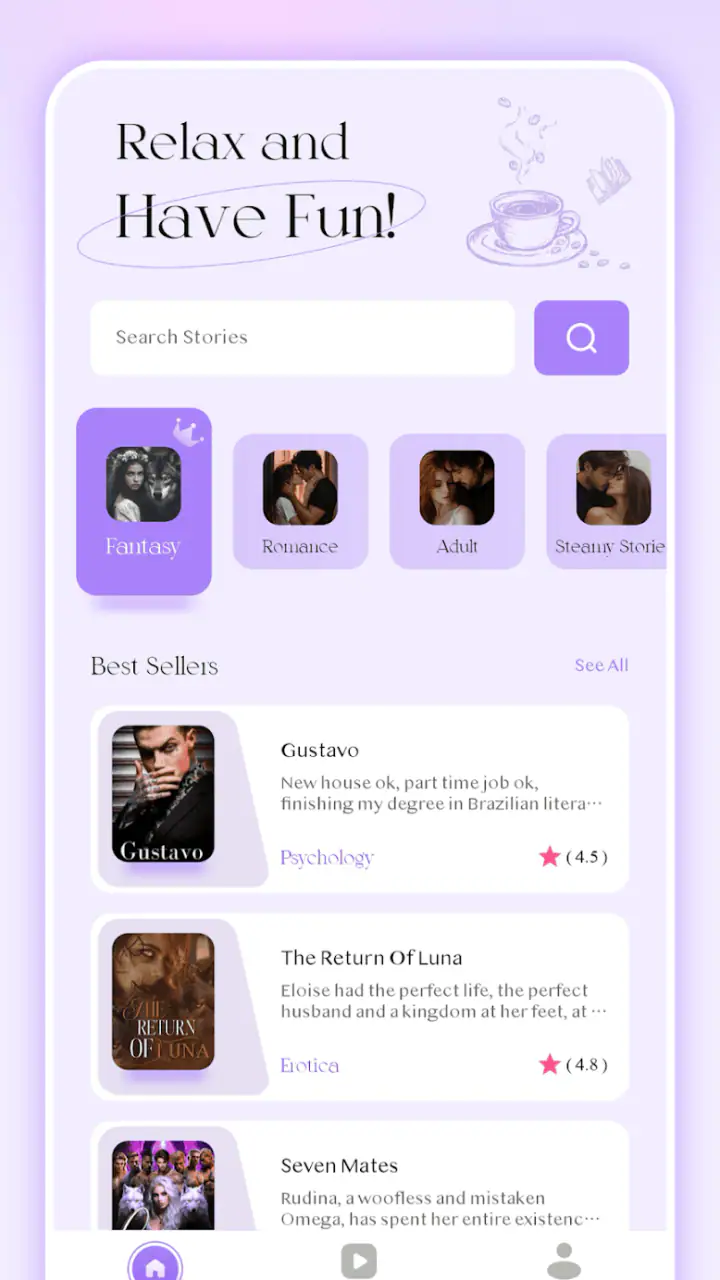
Another useful habit is to treat short sessions as complete units. Rather than waiting for a large block of free time, I would read at the end of a lunch break or before putting the phone on charge. That approach suits Floread’s casual identity and reduces the pressure to remember every detail between long gaps. It also exposes a trade-off: readers who prefer deep, uninterrupted immersion may find a dedicated e-reader or traditional book more satisfying.
How it compares with familiar alternatives
Compared with a physical novel, Floread wins on availability and loses on the tactile experience. There is no need to keep a book in a bag, find a reading light, or protect a cover from daily wear. On the other hand, a phone brings notifications, battery concerns, and the temptation to switch apps. If your reading habit depends on being away from distractions, the familiar paper alternative may be stronger.
Compared with a broad e-book platform, Floread feels more focused on casual entertainment than on building a complete personal library. A larger service may be better for readers who already know which authors they want, need advanced organization, or move between several devices. Floread makes more sense for someone who wants an accessible novel-reading option without turning the phone into a complicated library-management system.
It also differs from short-form entertainment. A feed gives instant variety, while a novel asks for continuity and patience. Floread is worthwhile when you want the slower reward of following a story rather than constantly resetting your attention. If you mainly want quick clips, headlines, or endlessly changing posts, the app may feel demanding even though its individual reading sessions are easy to start.
Where the recurring value comes from
The app’s long-term potential is tied to routine, not novelty. In my experience, a reading app survives on a phone when it solves a repeated problem: what to do during small quiet moments. Floread can fill that role for readers who want fiction close at hand and prefer a less formal alternative to a dedicated reading device.
Its audience size suggests that it is still a relatively small product, with over ten thousand installs and an average score of 4.4 from around one hundred and sixty ratings. I would read that as encouraging interest rather than proof that it will suit everyone. A smaller app can feel more manageable, but it may also have less depth than the biggest names in digital reading. The rating is a useful signal of satisfaction, not a replacement for checking whether its reading style fits you.
The free entry point makes experimentation straightforward. I can try the reading experience without committing money at the start, which is valuable when I am unsure whether a lighter novel app will become part of my routine. There are optional purchases ranging from $0.99 to $99.99 per item, so I would pay attention before confirming anything. The gap between the smallest and largest purchase is substantial, and a free download should not be treated as an unlimited promise of free reading.
My practical advice is to decide in advance what value you expect. If you only want occasional reading, the free starting point may be enough to evaluate the app. If you become a regular reader, consider purchases individually rather than assuming that spending automatically improves the experience. A good rule is to pay for a specific story or benefit you already understand, not because a limited-time feeling of excitement makes the choice seem urgent.
Maintenance is low, but attention still has a cost
Floread does not need to become another demanding service in my daily life. The maintenance burden is mostly behavioral: remembering where I stopped, resisting the urge to multitask, and deciding whether I am still enjoying a story. That is lighter than managing a large digital library, but it is not nothing. A reading habit can quietly become another unfinished task if I keep opening stories without making progress.
I would keep the app in a location that supports its purpose, but not somewhere that encourages automatic checking every few minutes. A reading app works best as a deliberate replacement for idle scrolling, not as another source of notifications or compulsive phone use. Opening it only when I have a genuine pause helps preserve the feeling that reading is restorative rather than obligatory.
Device compatibility is another practical advantage. Since it supports Android 7.0 and above, it can work on older Android phones that may not run every modern entertainment app comfortably. That broad compatibility is useful for people who keep an older device as a backup or prefer not to upgrade simply to read. Even so, the quality of the experience will still depend on the phone’s screen, battery condition, and general responsiveness.
I would also make sure the phone itself is ready for reading. Lower brightness, a comfortable text size, and a quiet setting matter more than they seem. These are not special Floread features; they are ways to prevent the device from undermining the app. If I finish a session with tired eyes or constant interruptions, I am more likely to blame the whole reading habit instead of adjusting the conditions around it.
What may cause fatigue after the first month
The biggest risk is repetition. If the available stories do not continue to surprise me, the app can shift from a discovery tool to an icon I ignore. This is a common problem for entertainment apps: the first week benefits from curiosity, while the second or third asks whether there is enough fresh value to justify returning. Floread needs to keep earning attention through the reading itself.
Phone reading can also become tiring during long sessions. The same screen used for messages and work is now being asked to provide relaxation, and that association may make it harder to settle into fiction. Readers who are sensitive to glare, prefer paper-like displays, or want a distraction-free environment may reach for a physical book or dedicated e-reader instead.
The mature rating narrows the audience as well. That is appropriate for the content classification, but it means the app is not a universal household reading option. Parents seeking a safe first reading app for a teenager should look for something designed around that younger audience. Floread is better suited to adults who are comfortable choosing entertainment intended for mature readers.
Purchasing can become another source of friction if I do not understand what I am paying for before making a decision. The free download lowers the barrier to trying the app, but optional items can change how I evaluate its value over time. I would avoid buying simply to solve the feeling that I have already invested time. If the reading experience is not holding my attention, spending more is unlikely to fix the underlying problem.
There is also a personal trade-off between convenience and ownership. A phone app is always nearby, but that does not necessarily give me the same sense of keeping a book permanently. Readers who collect editions, lend books to friends, annotate heavily, or want complete control over their library may find a conventional e-book store or physical collection more suitable.
Who should make room for it?
I would recommend Floread to someone who wants fiction available during short breaks, prefers reading on a phone, and does not need a large set of advanced library tools. It is particularly appealing if social feeds are taking over idle moments and you want an alternative that asks for more attention but gives a story in return. The free starting point also makes it reasonable for curious readers to test without treating the decision as a major commitment.
I would be more cautious about recommending it to heavy readers who already have a carefully organized e-book library. Those users may value synchronization, extensive catalog depth, annotation, typography controls, or a dedicated device more than convenience. I would also steer younger readers and families toward an app whose age positioning matches their needs, since Floread is intended for a mature audience.
For a realistic everyday routine, I would use it during a commute or while waiting somewhere, then stop at a natural point instead of forcing myself to finish a chapter. I would keep one active story rather than jumping between several, because continuity is what turns scattered minutes into a reading habit. After a few weeks, I would ask a simple question: am I opening Floread because I want to read, or because I feel I should justify having installed it?
My long-term verdict
Floread - Light Read earns consideration as a convenient entertainment app, but its lasting value depends on the match between its reading material and my personal routine. I like the idea of using small pockets of time for novels, and the free entry point makes that idea easy to test. The Android compatibility is also practical for readers who are not using a new phone.
My reservation is that convenience alone cannot sustain a reading habit. The app has to keep me interested after the first burst of discovery, and I have to manage the phone-related distractions that come with reading on a general-purpose device. The mature age classification and optional purchases also mean that it is not the right recommendation for every household or every kind of reader.
In the end, I would keep Floread installed if it consistently replaces unhelpful scrolling with enjoyable fiction. I would not keep it merely because it was easy to download. That is the fair test for this app: after the novelty fades, does opening it still feel like the best use of a spare moment? For casual adult readers who answer yes, it can become a useful little reading companion. For readers seeking a complete, deeply managed library, a dedicated e-book alternative will probably have more staying power.
FAQs for Floread - Light Read
What is Floread - Light Read and what can I use it for?
Floread - Light Read is designed for people who want a more comfortable and focused reading experience on a mobile device. It can be useful for reading digital content in short sessions, reviewing articles, or relaxing with written material without the visual overload found in some heavier reading apps. Its appeal is mainly its simple, lightweight approach rather than a large collection of advanced tools.
Is Floread - Light Read free to download and use?
The application may be available to download at no initial cost, but users should check the current Google Play Store or App Store listing for the exact pricing model. Some features may depend on advertising, optional purchases, or a premium version. Before downloading, review the store description, subscription terms, and in-app purchase details carefully, especially if the app is intended for children or used on a shared device.
Does Floread - Light Read work offline?
Offline functionality can depend on the type of content you are reading and how the application handles saved material. Basic reading features may remain available without an internet connection, while downloading new content, synchronizing progress, or loading external pages may require mobile data or Wi-Fi. It is best to save content in advance and test offline access before relying on the app during travel.
Is Floread - Light Read available for both Android and iPhone?
Availability can vary by region, operating system, and the developer’s current release plans. Users should search for the official Floread - Light Read listing in Google Play for Android or the App Store for iPhone and iPad, checking the developer name and screenshots before installing. Confirming compatibility is also important because older devices or operating-system versions may not be supported.
Is Floread - Light Read safe and suitable for regular reading?
As with any mobile application, safety depends on downloading it from an official store and reviewing the permissions requested during installation. Before using Floread - Light Read regularly, check its privacy policy, data-collection information, update history, and user reviews. The app may be a good fit for readers who prefer simplicity, but users wanting extensive accessibility, annotation, or library-management features should verify that those tools are included.
Pros
- Clean
- distraction-free interface makes short reading sessions feel comfortable.
- Lightweight app runs smoothly on most modern Android and iOS devices.
- Simple navigation helps users open and switch between reading materials quickly.
- Minimal design is easy to understand
- even for first-time users.
- Useful for fitting brief reading moments into a busy daily routine.
Cons
- Limited advanced reading tools may disappoint users seeking extensive customization.
- The small feature set can feel restrictive for experienced ebook readers.
- Content organization may become less convenient with a larger personal library.
- Offline reading options may depend on the material or app configuration.
- Some users may prefer richer visual themes and accessibility controls.


